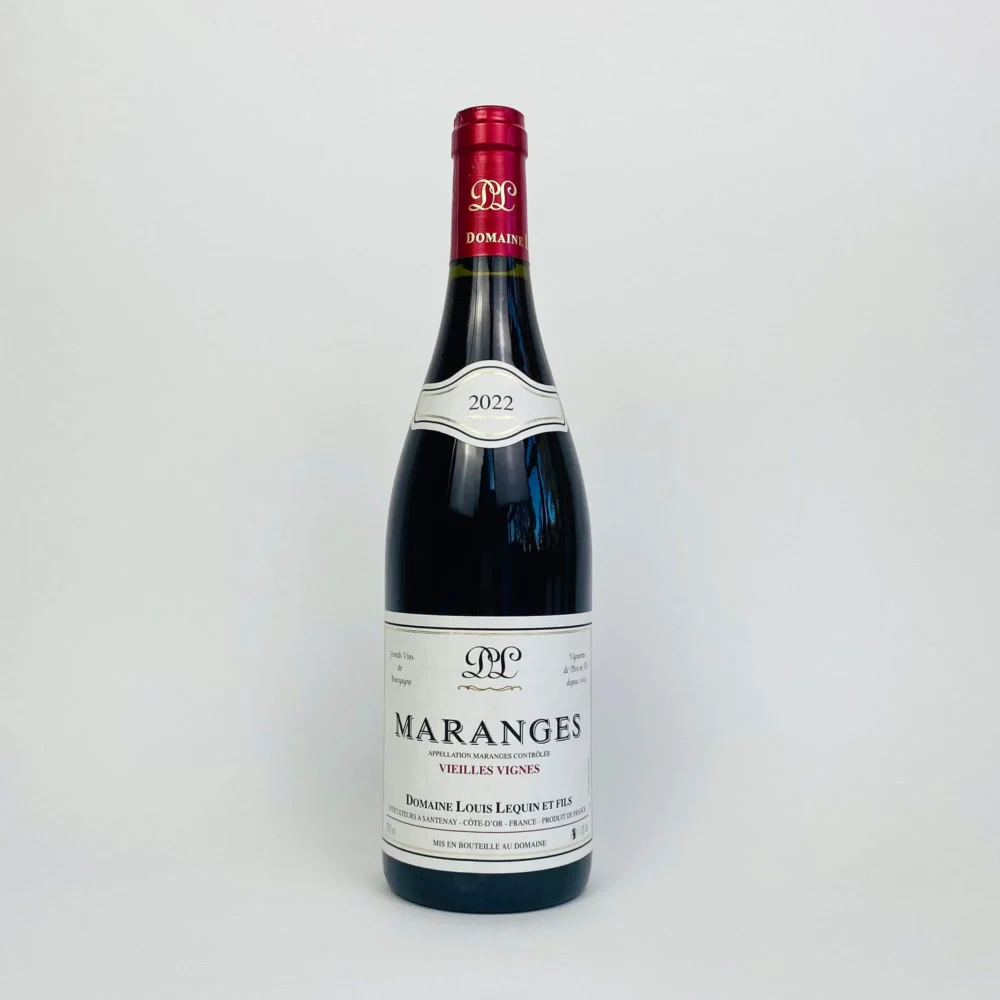
Maranges
Maranges forms the southernmost appellation of the Côte de Beaune, immediately beyond Santenay and at the transition towards the Côte Chalonnaise. The appellation covers vineyards around the villages of Cheilly-lès-Maranges, Dezize-lès-Maranges and Sampigny-lès-Maranges. Pinot Noir dominates production, although a smaller quantity of Chardonnay is also made. Maranges received its own appellation in 1989.
The vineyards extend across slopes and valleys with varied exposures, generally between 240 and 400 metres altitude. Limestone and marl are mixed with significant amounts of clay in many sites, contributing to the relatively structured character of the reds. The southern location brings good ripeness, while altitude and cooler air from the surrounding valleys help preserve freshness.
Maranges has seven Premier Cru climats but no Grand Cru vineyards. The Premiers Crus include Clos de la Boutière, La Fussière and Clos des Rois, with La Fussière forming the largest and best-known concentration of Premier Cru vines.
The red wines are typically generous and structured, with red and dark fruit, spice and earthy notes. Once considered somewhat rustic compared with more prestigious Côte de Beaune villages, the best modern examples show considerably greater finesse and precision. Maranges remains relatively under-the-radar and can offer excellent value for lovers of characterful red Bourgogne.