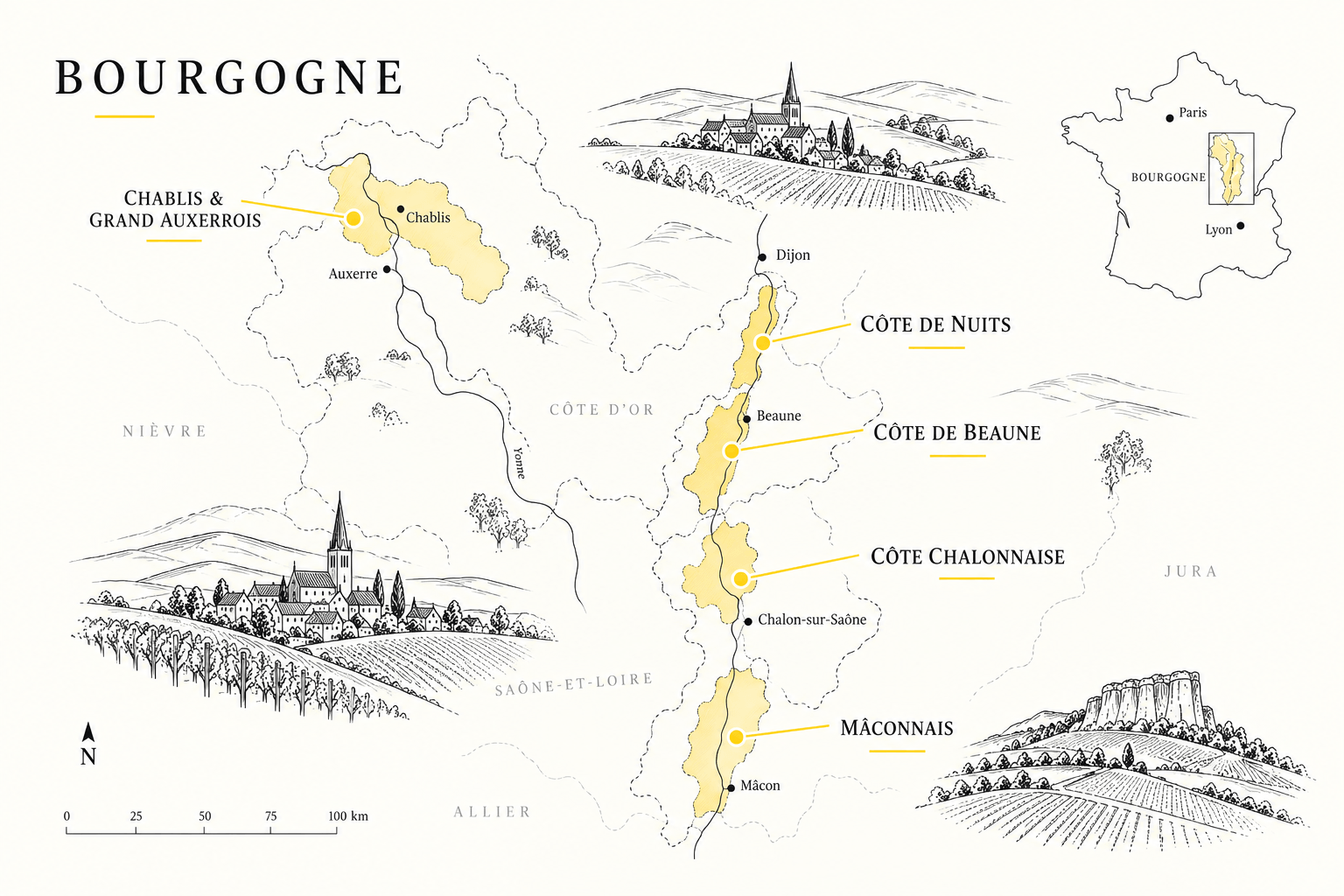
Chablis & Grand Auxerrois forms the northernmost wine-growing area of Bourgogne. Geographically, it sits apart from the famous vineyards around Beaune and Dijon and is considerably closer to Champagne than to the southern end of Bourgogne. This northern location has an unmistakable influence on its wines. Chablis is world-famous for its distinctive interpretation of Chardonnay, but the wider region is more diverse than many wine drinkers realise. Alongside Chardonnay you will find Pinot Noir, Aligoté and even Sauvignon-Blanc.
A cool, northern landscape
The vineyards are spread across rolling hills and valleys surrounding Chablis, Auxerre and numerous smaller wine villages. The climate is relatively cool and continental, with cold winters and spring frost traditionally posing an important risk to growers. One of the region’s defining geological features is its limestone-rich soil. Around Chablis in particular, vineyards are strongly associated with Kimmeridgian limestone and marl, formed from ancient marine sediments.
Combined with the cool climate, these conditions help explain the freshness and tension for which the wines are known.
Chablis: distinctive Chardonnay
Chablis is by far the most famous name in the region. Chardonnay dominates completely, but the wines can be strikingly different from Chardonnay produced farther south in Bourgogne. Classic Chablis is generally dry, fresh and precise, with lively acidity and flavours ranging from citrus and green apple to white flowers. The wines are frequently described as mineral, saline or chalky.
Oak is not necessarily absent, particularly among more ambitious Premier Cru and Grand Cru wines, but it rarely defines traditional Chablis. The emphasis is usually on freshness, purity and origin.
The vineyards surrounding the town produce wines across the familiar Petit Chablis, Chablis, Chablis Premier Cru and Chablis Grand Cru levels. At the top, the Grand Cru vineyards sit together on the slopes overlooking Chablis and can produce considerably richer, deeper and longer-lived wines.
Beyond Chablis: the Grand Auxerrois
Travel west and south of Chablis and the picture becomes much more varied. Around Auxerre, several historic wine villages produce both white and red wines. Irancy is particularly notable for Pinot Noir, producing characterful reds that can combine red fruit, freshness, spice and an earthy character. Small amounts of the traditional César grape may also be included.
Saint-Bris is even more unusual in Bourgogne: its white wines are made from Sauvignon-Blanc and Sauvignon-Gris, rather than Chardonnay. They tend to be aromatic, crisp and refreshing.
Further south, Vézelay has become an increasingly interesting source of Chardonnay. Its wines are generally bright, fresh and approachable, often offering excellent value compared with Bourgogne’s better-known Chardonnay-producing villages. You will also encounter wines associated with places such as Coulanges-la-Vineuse and Chitry, illustrating just how varied this northern part of Bourgogne really is.
More than just Chablis
Chablis understandably dominates the reputation of northern Bourgogne. At its best, it produces some of the world’s most distinctive Chardonnay: wines combining concentration with remarkable freshness and capable of developing beautifully in bottle. But stopping at Chablis means overlooking much of what makes the area interesting.
The Grand Auxerrois offers a more diverse and exploratory side of Bourgogne, with Pinot Noir, Chardonnay, Sauvignon-Blanc and lesser-known local traditions sharing the landscape. For Bourgogne lovers, that combination makes the region particularly rewarding: Chablis provides the great international name, while the surrounding vineyards still offer plenty to discover.