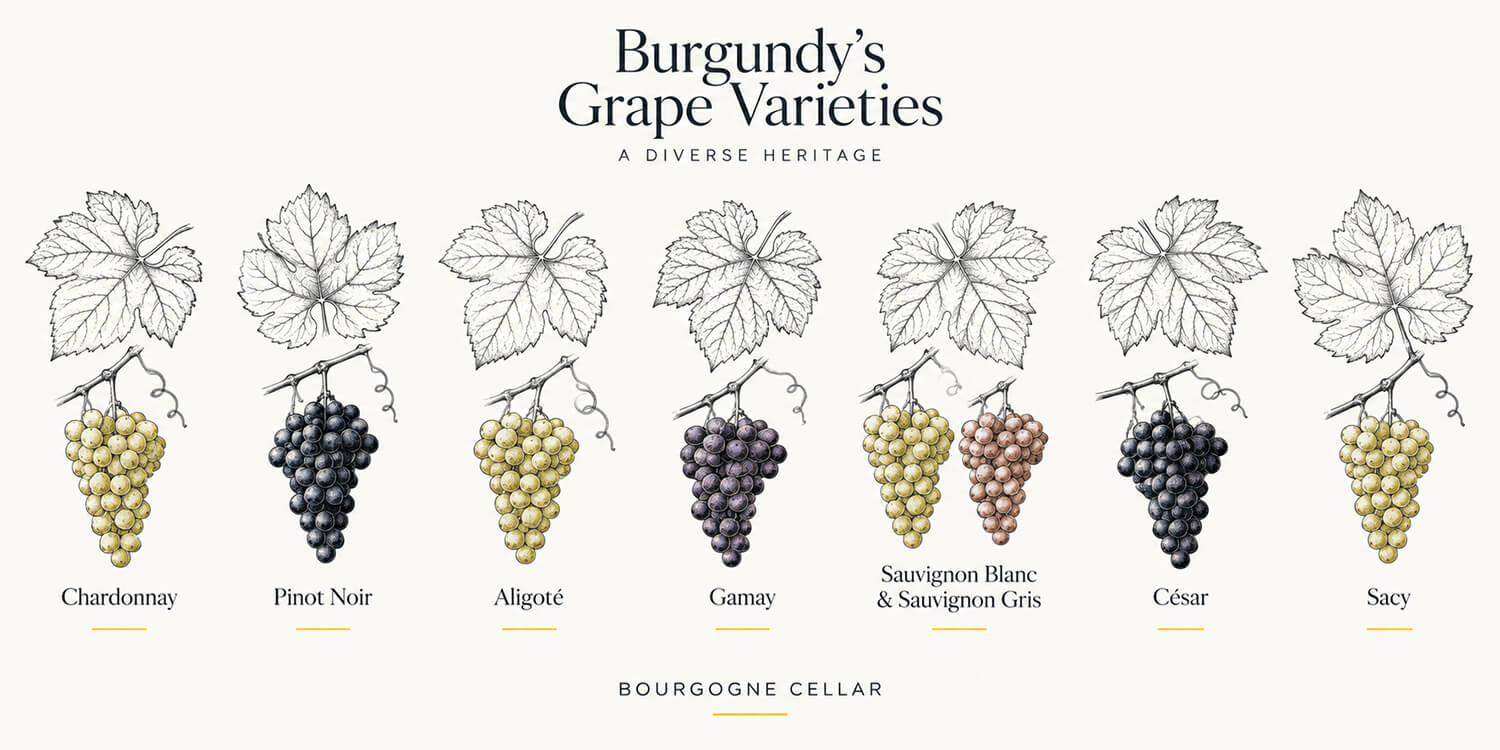
Gamay is most closely associated with Beaujolais, immediately south of the Mâconnais. But the variety also has a long and sometimes turbulent history in Bourgogne itself. Today, Gamay plays a relatively modest role compared with Pinot Noir and Chardonnay. Nevertheless, it remains part of Bourgogne’s viticultural identity, particularly in the south and in regional wines where it can produce fresh, fruity and highly drinkable reds.
A complicated history in Bourgogne
Gamay has been cultivated in the region for centuries. Like Chardonnay and Aligoté, it is a natural offspring of Pinot and Gouais Blanc. Its history in Bourgogne includes one particularly famous episode. In 1395, Duke Philip the Bold ordered Gamay to be removed from parts of his Burgundian territory, describing it in decidedly unflattering terms and favouring Pinot Noir.
The decree has sometimes been simplified into a story of Pinot Noir being recognised as superior to Gamay. Reality was more complicated, involving vineyard practices, yields, reputation and politics. Nevertheless, it helped establish a historical distinction that remains visible today: Pinot Noir became dominant in Bourgogne’s most prestigious red-wine vineyards, while Gamay found its great stronghold farther south.
Where is Gamay grown?
Within Bourgogne, Gamay is particularly relevant in the Mâconnais, where the proximity to Beaujolais becomes increasingly apparent. The grape is also important for Bourgogne Passe-Tout-Grains, a traditional regional wine in which Gamay is blended with Pinot Noir. The result can combine Gamay’s exuberant fruit with some of Pinot Noir’s perfume and structure. Gamay can also appear in other permitted regional Bourgogne wines, depending on their production rules. Its role is therefore quite different from Pinot Noir. Gamay is not responsible for the famous red Grand Crus of the Côte d’Or, but it remains part of the broader Burgundian vineyard landscape.
What does Gamay taste like?
Gamay is generally known for its bright fruit and freshness. Typical aromas include raspberry, strawberry, red cherry and violet, sometimes accompanied by pepper, herbs or subtle earthy notes. Tannins are usually relatively gentle, making many Gamay-based wines approachable when young. Winemaking can have a significant influence. Traditional fermentation can produce more structured examples, while techniques involving carbonic or semi-carbonic maceration can emphasise juicy fruit and floral aromas.
In Bourgogne, Gamay is particularly interesting when blended with Pinot Noir. The two varieties are closely related genetically but have different personalities in the glass.
Gamay in the vineyard
Gamay is vigorous and productive, which historically contributed both to its popularity among growers and to criticism of the variety. If yields become excessive, wines can lose concentration. Careful vineyard management therefore makes an important difference. The variety buds early and ripens relatively early. It performs particularly well on certain granite soils in neighbouring Beaujolais, but within Bourgogne it is grown under a wider range of conditions, especially towards the south.
A different side of red Bourgogne
Gamay will never have the status of Pinot Noir in Bourgogne. Nor does it need to. Its strengths are different. Gamay can bring juicy fruit, freshness and immediate pleasure, while blends with Pinot Noir represent a traditional style of Bourgogne that is sometimes overlooked today. For wine lovers accustomed to thinking of Bourgogne simply as Chardonnay and Pinot Noir, Gamay is a useful reminder that the region has always been more diverse. And its controversial history makes it perhaps Bourgogne’s most rebellious grape variety.