Aligoté has always lived somewhat in the shadow of Chardonnay. Yet this historic white grape is an unmistakable part of Bourgogne and, in recent years, has attracted renewed attention from growers and wine lovers alike. Traditionally associated with simple, fresh everyday wines, good Aligoté can be considerably more serious. Old vines, carefully selected sites and ambitious producers can deliver wines with energy, texture and a distinctly Bourgogne character.
A historic Bourgogne grape
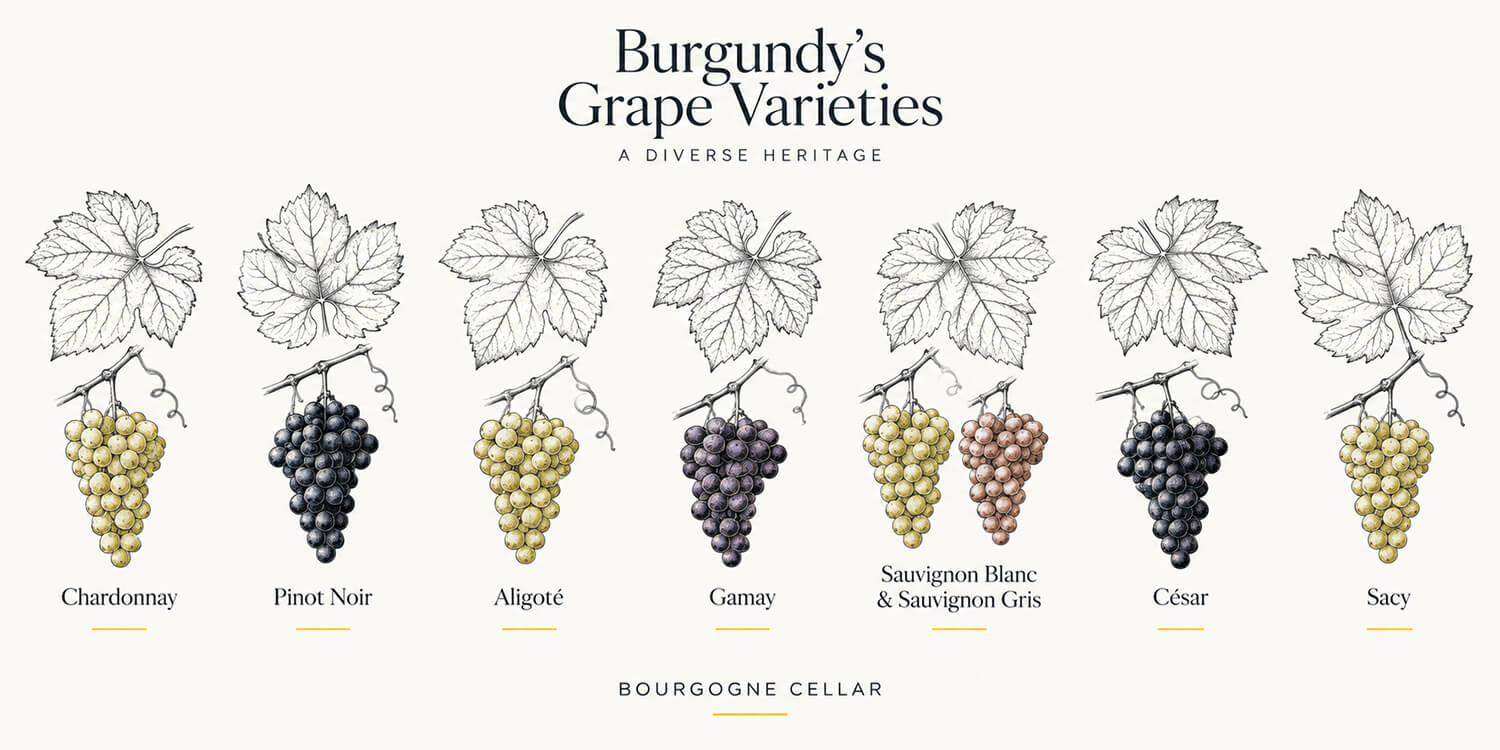
Like Chardonnay, Aligoté is the result of a natural crossing between Pinot and Gouais Blanc. It has been cultivated in Bourgogne for centuries and was once much more widely interplanted with other varieties. Today, Aligoté represents only a relatively small part of Bourgogne’s vineyards. Chardonnay occupies most of the prestigious white-wine sites, while Aligoté has historically been planted in less celebrated locations.
Most wines are sold under the Bourgogne Aligoté appellation, which covers production across a broad part of Bourgogne. There is, however, one particularly important exception: Bouzeron, in the Côte Chalonnaise. Here, Aligoté has its own village appellation and takes centre stage.
What does Bourgogne Aligoté taste like?
Classic Aligoté is typically dry, fresh and lively, with relatively high acidity. Young wines can show lemon, green apple, white flowers and fresh herbs, sometimes accompanied by saline or stony impressions. Compared with Chardonnay, Aligoté is generally leaner and more direct. But that description does not tell the whole story. Low yields, older vines and good vineyard sites can produce Aligoté with considerably greater depth. These wines may show citrus and orchard fruit alongside floral, mineral and sometimes slightly nutty characteristics. With careful élevage, they can also gain texture without losing their characteristic freshness.
Bouzeron and Aligoté Doré
Bouzeron has played an important role in demonstrating what the variety can achieve. The village is particularly associated with Aligoté Doré, a traditional form of Aligoté with smaller berries that is prized by many growers for producing more concentrated and aromatic wines. Bouzeron became its own appellation in 1998, giving Aligoté something unusual in Bourgogne: an appellation where the variety is not playing a supporting role to Chardonnay. The wines can combine freshness with greater body and complexity, making Bouzeron an excellent introduction to serious Aligoté.
Aligoté in the vineyard and cellar
Aligoté tends to ripen later than Chardonnay and naturally retains good acidity. This historically made it useful in sites where maintaining freshness was rarely a problem. Today, warmer growing seasons are changing that perspective. A variety capable of retaining acidity has become increasingly interesting. In the cellar, producers may use stainless steel, larger wooden vessels or barrels. As with Chardonnay, the approach varies considerably, but the most compelling examples generally preserve Aligoté’s natural freshness and directness.
From supporting role to serious wine
Aligoté was once best known as the wine traditionally mixed with crème de cassis to make a Kir. That association contributed to its reputation as Bourgogne’s simple second white grape. That image is changing. A growing number of excellent domaines now treat their Aligoté with the same attention given to more prestigious vineyards. Old vines and distinctive parcels are increasingly bottled separately, and serious wine drinkers are paying attention.
Aligoté will probably never replace Chardonnay as the great white grape of Bourgogne — nor should it. Its appeal lies elsewhere: fresh, characterful and unmistakably different, Aligoté reveals another side of white Bourgogne.